


Plant Facility
Where Technology
Shapes Perfection
From raw material preparation to final packaging, every stage is engineered with precision and advanced technology. Our streamlined process ensures superior strength, flawless finish, and consistent quality, delivering high performance porcelain tiles for modern architectural needs.
Ball Mill
Ball milling is the first crucial stage in porcelain tile manufacturing where raw materials like clay, feldspar, and silica are finely ground with water. This process creates a uniform slurry with consistent particle size. Proper milling ensures optimal chemical composition, improved bonding strength, and smooth surface quality, forming a strong foundation for high-performance porcelain tiles.
Spray Dryer
In the spray drying process, the prepared slurry is transformed into fine, dry granules by spraying it into a hot air chamber. Moisture evaporates instantly, producing uniform powder with controlled humidity. This granulated material ensures excellent flow and compaction during pressing, directly impacting tile density, strength, and dimensional stability in the subsequent manufacturing stages.
Silo
The silo stage involves storing the spray-dried granules under controlled conditions to maintain consistent moisture and quality. This resting period allows homogenization, ensuring uniform distribution of particles and moisture throughout the material. Proper silo management enhances pressing efficiency, prevents defects, and guarantees stable performance in the tile formation process, contributing to overall product consistency.
Press
During pressing, the granulated powder is compacted under high pressure using advanced hydraulic presses to form raw tile shapes. This stage determines the tile’s thickness, density, and strength. Uniform pressure distribution ensures consistent dimensions and surface quality. Precision in pressing is essential to achieve defect-free tiles with excellent mechanical properties and structural integrity.
Dryer
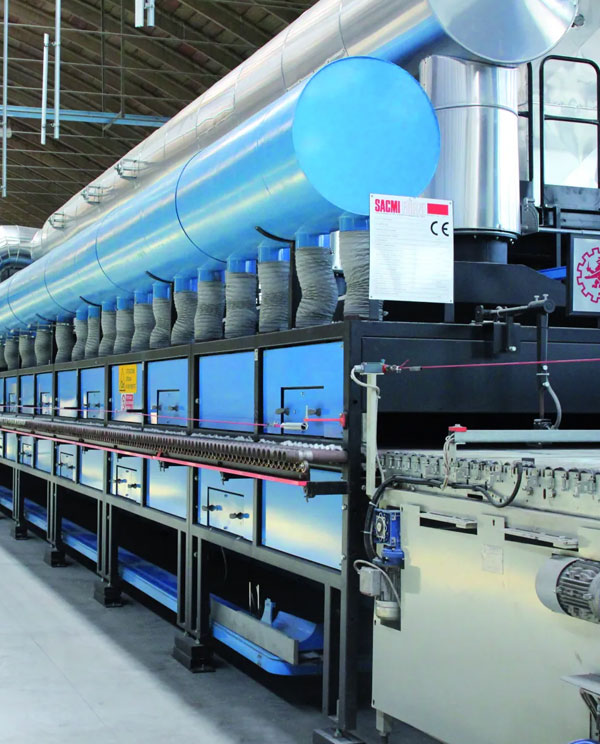
The drying process removes residual moisture from pressed tiles using controlled heat. This step is vital to prevent cracks, warping, or breakage during firing. Uniform drying ensures structural stability and prepares tiles for further processing. Proper temperature and airflow control help maintain tile shape and strength, ensuring consistent quality before entering the high-temperature kiln stage.
Compensator
The compensator stage balances tile dimensions by adjusting minor variations caused during drying. It ensures uniformity in thickness and size before printing and firing. This process improves calibration and alignment, reducing the risk of defects in later stages. Accurate compensation enhances overall production efficiency and ensures consistent tile quality, meeting strict dimensional standards.
Digital printing technology applies high-definition designs onto tile surfaces using advanced inkjet systems. It allows precise replication of natural textures like marble, wood, and stone. This process offers unlimited design possibilities with consistent color accuracy. High-resolution printing enhances aesthetic appeal, making each tile visually rich while maintaining durability and resistance to wear and fading.
Kiln
The kiln is where tiles are fired at extremely high temperatures, transforming them into strong, dense, and durable porcelain. This process vitrifies the material, enhancing hardness, water resistance, and longevity. Controlled heating and cooling cycles are critical to avoid defects. The kiln stage defines the tile’s final strength, finish, and performance characteristics.
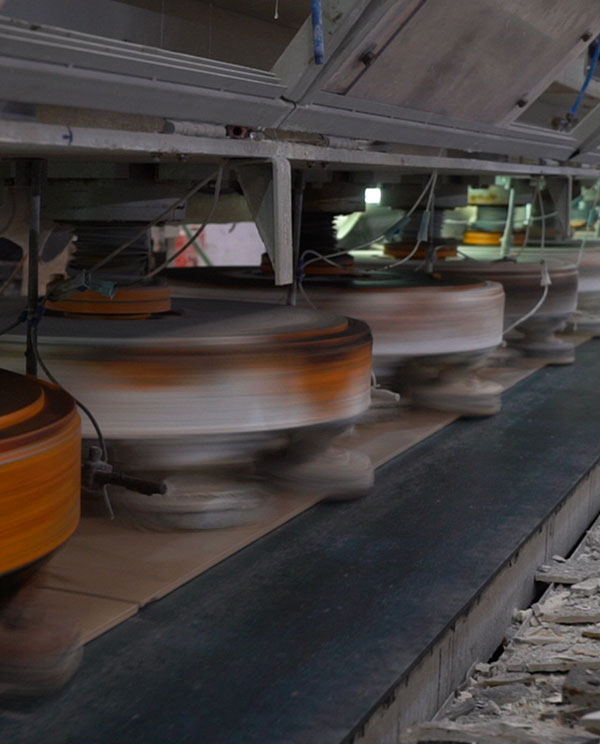
In this stage, tiles undergo surface polishing to achieve a smooth, glossy finish or desired texture. Rectification ensures precise edge cutting for uniform size and sharp corners. This allows seamless installation with minimal grout lines. Advanced machinery guarantees high accuracy, enhancing both appearance and functionality, making tiles suitable for premium residential and commercial applications.
Packing
The final stage involves careful inspection and packaging of finished tiles to ensure they meet quality standards. Tiles are sorted, labeled, and packed using protective materials to prevent damage during transportation. Efficient packing maintains product integrity, ensures safe delivery, and reflects brand professionalism, preparing tiles for distribution to domestic and international markets.